You’re going about your day when a polite call or letter arrives asking about the mineral rights tied to your land. For many Texas landowners, this is the first hint that there may be oil and gas interests beneath property they’ve owned for years. It naturally raises a big question: What Happens If You Find Oil on Your Property?
Your mind may jump to lease bonuses and royalty checks, but early contact doesn’t mean drilling is approved or guaranteed. In Texas, “finding oil” usually starts with a landman, a lease offer, survey crews, or stakes in a field. These are signs of leasing and title work, not oil coming out of the ground.
That leads to the most important question of all: if you find oil on your property is it yours? The answer depends on whether you own the mineral rights or only the surface. That single detail determines whether you can lease the minerals and benefit from any future oil and gas production.

How to Confirm Whether You Own the Mineral Rights
Confirming mineral ownership is the primary stage after discovering or suspecting oil on your Texas land. Skipping it may result in negotiating deals you have no right to make and wasting time.
Begin by thoroughly reading your property deed for any mineral reservations or exceptions. Next, examine historical county records. Mineral rights in Texas can be severed at any point and remain in effect unless later conveyed back. Check for existing oil and gas leases already on record, as they can show ownership by another party.
Hiring a Texas oil and gas attorney or landman to perform a formal title search, especially in high-potential regions like the Permian or Eagle Ford, is better for accuracy. Remember that ownership of minerals is frequently partial, and any bonuses or royalties you receive will reflect only your proportional share.
What Happens Next If You Do Own the Minerals?
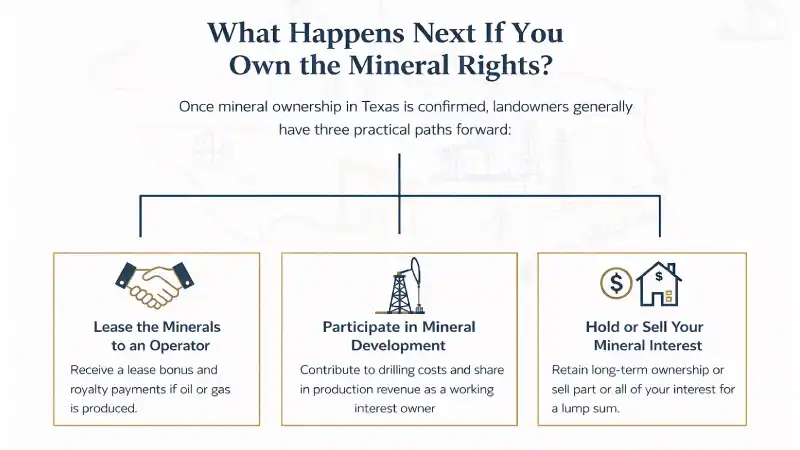
Once mineral ownership in Texas is confirmed, you face three main paths forward:
- Lease your minerals for an upfront bonus payment plus ongoing royalty payments based on production.
- Sell all or part of your mineral rights for a lump sum, locking in fair value today.
- Participate as a working interest owner, paying your share of drilling costs in exchange for a larger piece of net revenue.
Many Texas landowners choose a combination of these approaches over time, depending on current market conditions and their personal financial goals.
Your next move often starts with inbound contact from a landman or mineral buyer. These professionals track ownership records and may reach out after spotting your tract on mapping tools, Railroad Commission filings, or platforms like Mineral View.
Before responding to any offer, get a rough valuation of your royalty potential. Look at nearby oil wells, review production history, and consider commodity prices. Many first offers are lowball proposals designed to test whether you have done your due diligence.
Mineral View Features provides production and offset-well analytics showing what nearby wells are producing, essential data for evaluating whether early offers represent fair value or leave money on the table.
Option 1: Sign an Oil and Gas Lease
An oil and gas lease allows an operator to explore and produce oil while you retain mineral ownership. It is the most common option for Texas landowners seeking income without operational responsibility.
Key lease terms include:
- Bonus Payment: Upfront cash paid per net mineral acre. In active Permian areas (2022–2025), bonuses ranged from $500 to over $10,000 per NMA.
- Royalty Rate: Your share of production value is typically 20–25% in Texas, though many owners accept less than market rates.
- Lease Term: Usually a three-year primary term, continuing as long as production remains in paying quantities.
- Pooling and Units: Royalties are calculated based on your proportional acreage within a pooled unit.
Surface impacts also matter. Clauses covering water use, pipelines, roads, and surface damage can significantly affect day-to-day operations. Hiring a Texas oil and gas attorney is essential. Mineral View Features and community data help compare royalty rates and bonuses in your county, ensuring informed negotiations.
Did You Know? Some oil wells can produce for over 50 years, creating long-term income for mineral owners.
Option 2: Sell All or Part of Your Mineral Rights
Some landowners choose to sell minerals for immediate value.
Common reasons include:
- Locking in value during high oil prices
- Paying off debt or funding retirement
- Avoiding production volatility
- Simplifying estate planning
You do not have to sell everything. Many owners sell a portion of their minerals while retaining long-term upside.
Key value drivers for Texas minerals include location, nearby production, permitted drilling, decline curves, and current oil prices. Never accept the first offer, solicit bids from multiple buyers. Mineral View Features provide nearby well performance and permit history to help justify pricing. Always have a Texas attorney review the sale agreement and deed.
Option 3: Participate as a Working Interest Owner
Working interest ownership offers higher potential returns but involves substantial risk and is not passive income.
Owners pay their share of drilling and completion costs in exchange for a share of net revenue. For example, a Midland Basin horizontal well may cost $8–12 million; a 10% interest could require $800,000 to $1.2 million upfront, with no guarantee of recovery.
This option is best suited for financially sophisticated owners with sufficient capital, experienced partners, and an understanding of drilling economics. Mineral View MVestimate provides well-level production and decline-curve data to assess payout potential. Consult both a CPA familiar with Texas severance taxes and an oil and gas attorney before committing.
Quick Fact: Advances in horizontal drilling and hydraulic fracturing have dramatically increased recoverable oil, reshaping mineral values across many regions.
Regulation in Texas: Permits, Compliance, and Old Wells
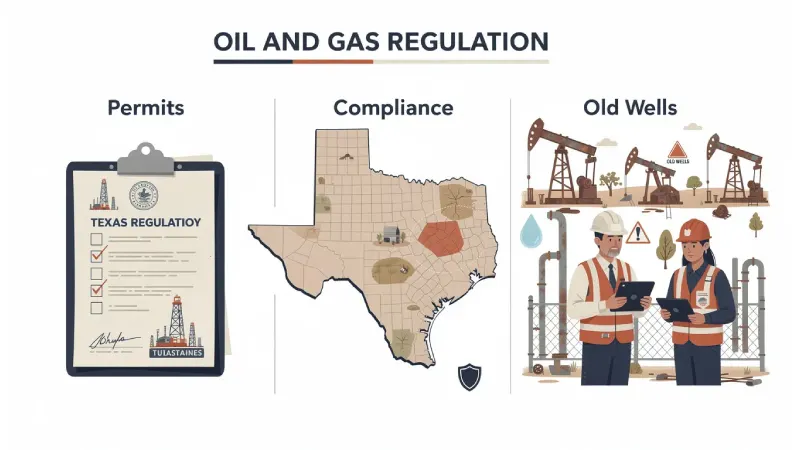
In Texas, all drilling operations and most well-related activities fall under the Railroad Commission of Texas (RRC), not federal agencies. The RRC regulates over 500,000 active oil and gas wells and issues permits for more than 4,000 new wells annually.
The Permitting Process:
Before a single rig arrives on your property, the operator must file a drilling permit with the RRC. This involves meeting spacing rules, demonstrating environmental compliance, and submitting wellbore design specifications. No operator can legally drill without regulatory compliance.
Environmental Safeguards Include:
- Groundwater protection through proper casing and cementing
- Surface spill prevention rules
- Requirements for saltwater disposal and waste handling
- Setback rules (often 1,000+ feet from homes)
These regulations affect everything from ranch roads to cattle access to crop irrigation. Understanding permitting requirements helps you anticipate what drilling operations will look like on your land.
Old and Orphaned Wells:
Many Texas properties (especially in older fields like East Texas and parts of the Panhandle) contain inactive wells that may need plugging. The RRC operates a state-managed plugging program for orphaned wells. As a landowner, you can request state plugging, pay for plugging with potential reimbursement, or sometimes take over production if you qualify as an operator.
Texas landowners can look up wells, permits, and production data using the RRC’s public GIS Viewer. Mineral View Features (Mineral Activities available on the dashboard) bundles and simplifies this data, making it accessible even if you are not an oil and gas industry expert.
Interesting Fact: The United States has more than 1.5 million abandoned or inactive oil wells, many of which pose environmental risks if not properly plugged and maintained.
Using Data and Technology to Make Better Decisions
In modern Texas oil development, data is power. Before signing any lease agreement or accepting a sale offer, you need to understand what is happening underground and around your property.
Public Data Sources Include:
- Railroad Commission production and permit filings
- Seismic surveys and geological maps
- Historical lease records and division orders
A tool like Mineral View Features can aggregate this information into an easy-to-read dashboard showing:
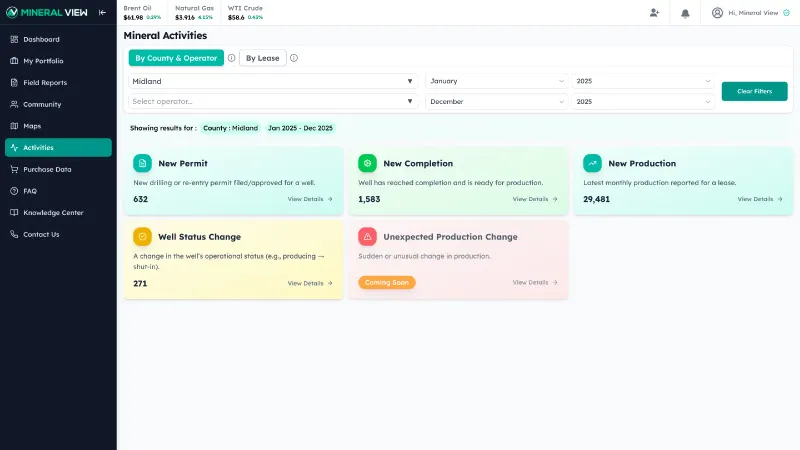
- Nearby well performance and operator track records
- Permit density and drilling trends
- Historical royalty and bonus trends in your county
Final Words for Texas Landowners
What Happens If You Find Oil on Your Property? In Texas, it’s as much a legal and strategic process as a geological one. Rushed decisions (signing the first lease that arrives or selling to the first buyer who calls) often cost landowners millions over a lifetime of production.
Many discover too late that if you find oil on your property, whether it is yours depends entirely on mineral ownership and proper due diligence.
To Protect your Interests:
- Confirm mineral rights through deed research and title work
- Understand your options: lease, sell, or working interest
- Evaluate nearby wells, permits, and production data
- Get guidance from a Texas oil and gas attorney and a qualified tax advisor before signing anything
Oil and natural gas are multi-decade assets, and today’s decisions shape inheritance, taxes, and land use for generations. If you want clarity on what’s happening above and below your land, who’s drilling nearby, how wells are performing, and what it means for your mineral wealth, explore Mineral View Features or share your thoughts with us today.
Informed decisions are the difference between leaving value underground and building lasting prosperity for your family.
Common Questions About Finding Oil on Your Property
Can an Oil Company Drill on My Texas Land if I Don’t Own the Mineral Rights?
Yes. In Texas, the mineral owner or their lessee generally has the right to reasonably use the surface to develop the minerals, subject to state law and Railroad Commission rules. Surface owners should negotiate a surface-use agreement to address access, damages, and water use.
Do I have to Pay Taxes on Oil Royalties or Mineral-Rights Sale Proceeds in Texas?
Yes. Texas has no state income tax, but oil and gas severance taxes apply to production, and royalties or sale proceeds are subject to federal income tax. Large sales may trigger capital gains, so tax planning is important.
How Long does it Usually Take from Signing a Lease to Getting my First Royalty Check?
Typically several months to a few years, depending on drilling and permitting. Once a well is producing, first royalty payments are often issued within three to six months.
What if my Texas Property Already has an Old or Abandoned Well on it?
Identify the well’s status through the Railroad Commission of Texas or helpful and easy-to-use tools from Mineral View. If it’s orphaned, it may qualify for state plugging; otherwise, contact the operator or consult an oil and gas attorney.
Can I Refuse to Lease my Minerals in Texas?
Yes. However, you may still be affected by pooling or drainage from nearby wells, and in rare cases, forced pooling. Review nearby activity before deciding.